

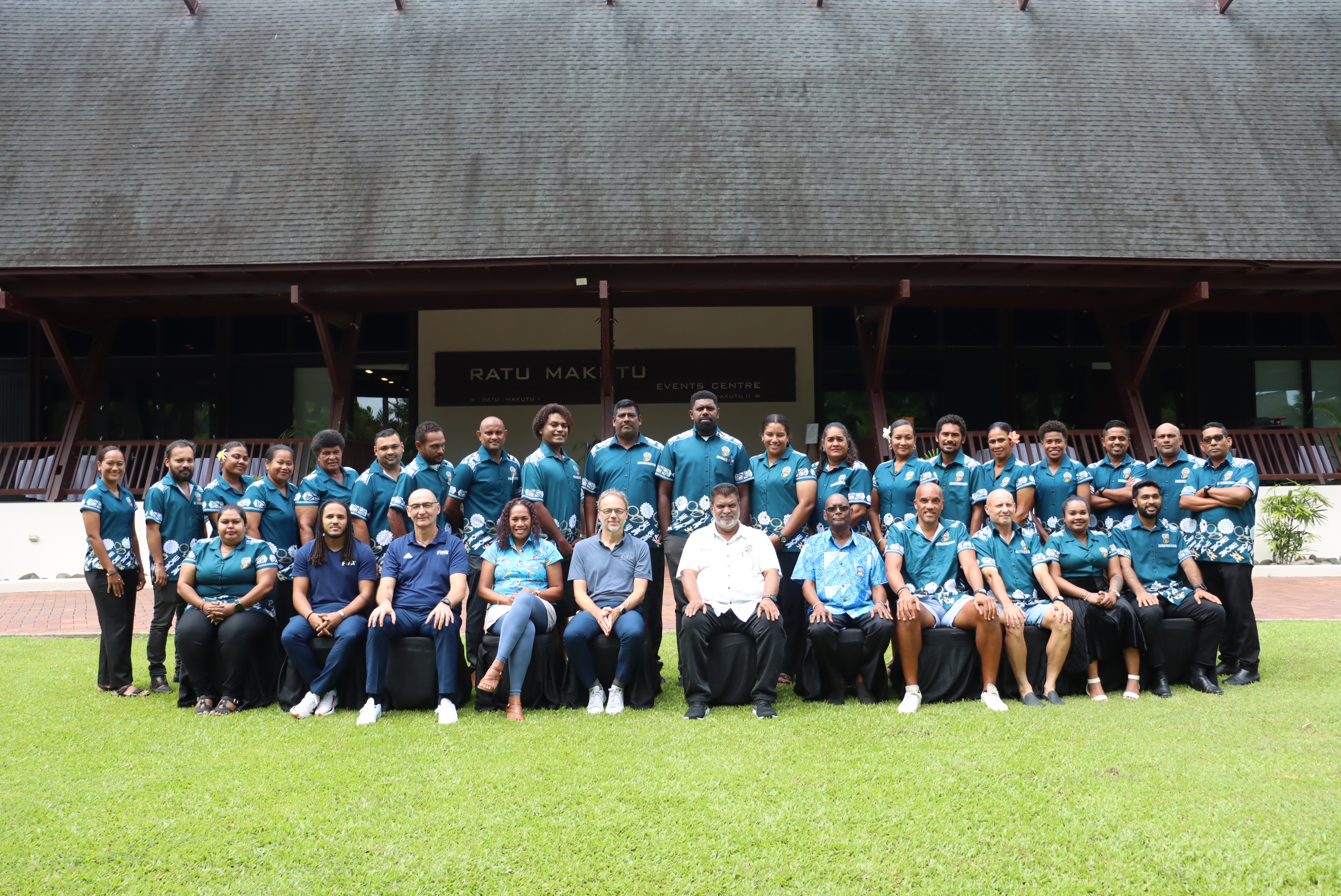
Oceania Football Confederation (OFC) Regional Consultant Flaccadori Patrice has highlighted the importance of Fiji understanding its current position in amateur football development, following the conclusion of the FIFA Amateur Football Environment Workshop held at Shangri-La Yanuca Island last week.
Patrice explained that the programme was launched after FIFA initiated a global review of amateur football structures worldwide.
“This programme has been implemented for two years, almost three years now, because FIFA decided to make a massive analysis of what amateur football is in the world,” Patrice said.
He said the initiative began in 2023 and required significant global cooperation from FIFA Member Associations.
“We started in 2023 with a massive collaboration with all the Member Associations in the world to collect data, and also some data from surveys. So, 185 Member Associations have participated in this massive programme,” he said.
Patrice stressed that Fiji’s involvement in the programme was important as it gives the Fiji Football Association a clearer understanding of where the country stands in terms of amateur football.
“For Fiji, it’s really important to know at what stage Fiji football is in terms of amateur football and in terms of development,” he said.
He added that the report serves as a snapshot of Fiji football’s current status and will guide future strategies.
“It will be the opportunity to take a picture at one moment and analyse what they have to do in terms of strategy,” Patrice said.
According to Patrice, the findings highlight key areas where Fiji can strengthen its football pathway, particularly at the grassroots level.
“We have seen through this report that there is a need to increase the number of players in grassroots, to develop more the base of the pyramid, and to establish a really solid foundation,” he said.
Patrice also pointed out that the growth of women’s football should remain a major priority, especially in developing more female coaches and players.
“We have also identified the lack in terms of women coaches’ numbers, and women players as well. So, focusing on those two points would be a really massive opportunity to develop everything,” he added.
Having visited Fiji over the past three years, Patrice said he has witnessed noticeable progress and praised the Fiji Football Association for being proactive in its development work.
“I have been visiting Fiji for three years now, and I have seen the progression in terms of development. Fiji Football Association is a proactive federation,” he said.
However, he noted that stronger coordination between stakeholders could further improve development efforts across the country.
“There are a lot of things to do, maybe to coordinate a little bit more the initiatives between the stakeholders, but you have a really good organisation, and the development is really good,” Patrice said.
Patrice also spoke about the use of a “Fiji galaxy” tool, which he said provides a clear picture of stakeholder alignment and collaboration within the football system.
“This ‘Fiji galaxy’ is done to show in a snapshot the current situation. It’s also an analysis on the collaboration between stakeholders… you can see if they are aligned with Fiji FA or not,” he explained.
He said the tool can assist Fiji FA in identifying areas where collaboration should be strengthened.
“It could be really useful for Fiji to take into account this galaxy… it could be a tool for you to identify which collaborators or stakeholders you want to increase collaboration with,” Patrice added.
Patrice acknowledged the extensive work involved in gathering the information and validating the data, including the completion of templates and online meetings to cross-check findings.
“It was a massive work to do… the process was to fulfil some templates, and from the Member Association side it was a really massive work,” he said.
Despite the workload, Patrice commended Fiji FA for their support and cooperation throughout the process.
“It was a massive work, but it was easy with Fiji Football Association,” he said.
The FIFA Amateur Football Environment Workshop is part of FIFA’s wider efforts to support Member Associations by strengthening grassroots structures and ensuring long-term sustainable football development.


