

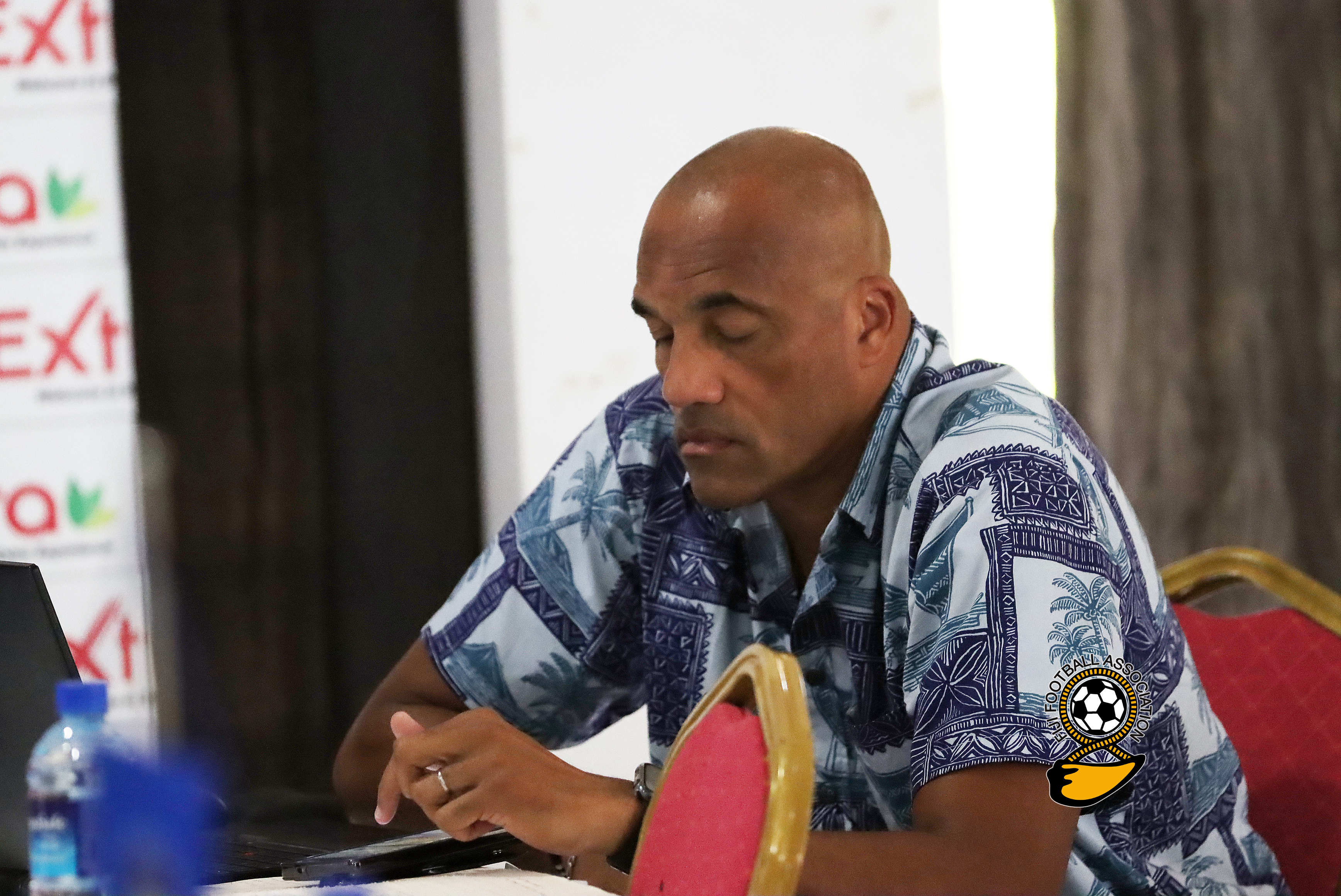
Fiji Football Association Technical Director David Baltase has outlined an ambitious plan to lift the technical, tactical and mental standards of young footballers, saying Fiji must improve its high-performance pathways to compete internationally.
Speaking at the Fiji FA Council meeting, Baltase said the main objective was to develop players’ technical abilities, tactical understanding and overall game intelligence.
“We saw a lot of teams able to play really quick, really fast and with a good understanding of the game,” Baltase said. “Physically and mentally, we need to be better.”
Baltase said he was surprised by the lack of competitiveness shown by some players in key moments, particularly in aerial duels.
“Sometimes our players don’t really fight for the ball, especially in the air,” he said. “This is something we will need to work on this year as part of our high-performance programme.”
Baltase confirmed that Fiji FA will continue to strengthen its FIFA Academy in Labasa, with all costs — including salaries and accommodation for the talent coach — fully funded by FIFA.
The talent coach will be based in Fiji for two years, working closely with selected players.
“The objective is to bring together the best players possible,” Baltase said. “If the best players train with the best, they will improve faster.”
He said players selected into the academy will train five to six times a week, undergoing structured technical development, physical testing and performance monitoring over a two-year period.
Baltase also confirmed plans to reopen and strengthen 17 development centres around the country, each staffed with a coordinator and at least two coaches.
“These centres will allow the best players in each zone to train together at least three times a week,” he said. “This is how we raise the overall level across the country.”
He said additional development centres could be added in the future as resources allow.
Baltase also proposed structural changes to youth competitions, in line with upcoming FIFA and OFC reforms, including the introduction of a new Under-15 competition.
“We need to prepare our boys and girls for the new FIFA competitions,” he said.
He said Fiji FA is considering shifting Under-19 to Under-20, allowing players more time to physically and mentally adapt before progressing to senior football.
“After Under-19, it is very difficult for some players to go directly into senior football,” Baltase said. “They may need one or two years to adapt to the rhythm and physicality.”
In the same approach, Baltase said the Federation is looking at moving Under-16 to Under-17, while implementing Under-15 competitions this year, subject to district approval.
Looking further ahead, Baltase said Fiji must also plan for Under-13 and Under-11 competitions, stressing that training alone is not enough for development.
“If we want grassroots development, we must also give young players competition,” he said. “You learn in training, but you also learn by playing matches.”
Baltase acknowledged that changes may be challenging for districts, but said they were necessary for the long-term growth of football in Fiji.
“I know change is not easy, but we need to be better,” he said. “Our players need to play more football if we want to improve.”


